
How September Heat Affects Tree Stress in Houston—and Why ArborTrue Is the Right Team to Call
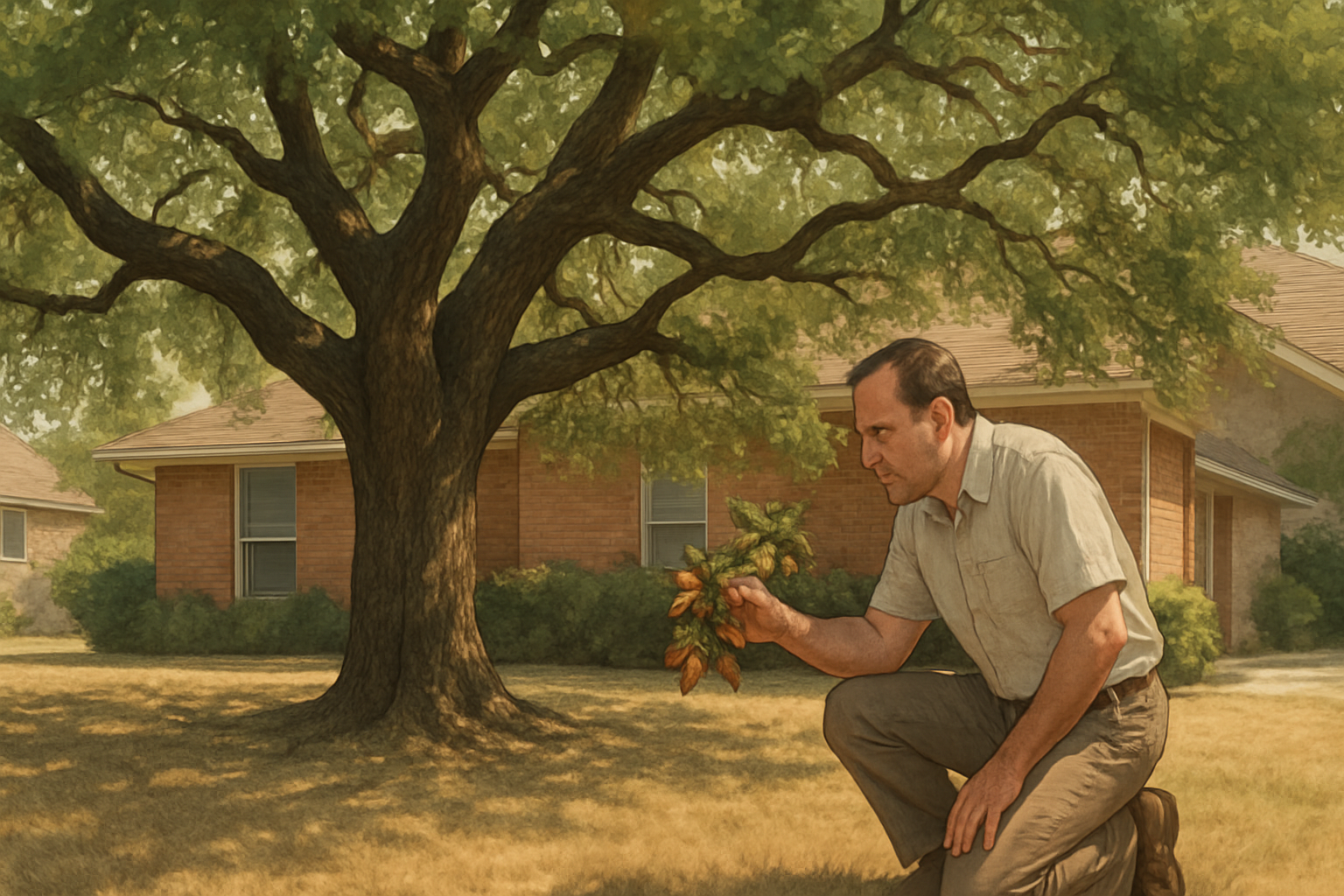
September in Houston can feel like summer is refusing to leave. Even as the calendar hints at fall, our trees are still dealing with intense heat, heavy humidity, hard afternoon sun, and the stop-and-start pattern of Gulf Coast rain. For homeowners, this is one of the most important times of year to pay attention to tree health. Heat stress that began in July or August often becomes more visible in September, and untreated problems can carry into fall and winter.
At ArborTrue, we work with Houston trees every day. We understand how our local climate affects live oaks, southern red oaks, pecans, crepe myrtles, magnolias, pines, palms, and other common landscape trees. September is not just “late summer”—it is a critical transition period when stressed trees either recover with proper care or decline further.
Key Takeaways:
- September heat in Houston can intensify drought stress, leaf scorch, pest activity, and root strain in landscape trees.
- Watch for warning signs like thinning canopy, premature leaf drop, browning leaf edges, dead limbs, and mushrooms near the trunk.
- Deep watering, proper mulching, and professional pruning can help trees recover before cooler weather arrives.
- ArborTrue provides local, practical tree care solutions designed for Houston’s heat, humidity, storms, and soil conditions.
Why September Heat Is So Hard on Houston Trees
By September, many Houston trees have already endured months of high temperatures. Even when we get rain, it may come in quick, heavy bursts that run off compacted soil instead of soaking deeply into the root zone. Then the sun returns, humidity rises, and the soil surface dries again.
This pattern creates a stressful cycle. Tree roots need oxygen and consistent moisture, but Houston conditions often swing between hot, dry soil and overly saturated ground after storms. Trees in newer neighborhoods, compacted yards, parking lots, or areas with limited root space are especially vulnerable.
Common September stress factors include:
- Lingering heat: High temperatures keep trees transpiring, meaning they lose water through their leaves.
- High humidity: Humidity can encourage fungal issues, especially in dense canopies with poor airflow.
- Compacted soil: Heavy clay and foot traffic can limit water absorption and oxygen movement around roots.
- Storm pressure: September is still part of hurricane season, and weakened limbs are more likely to fail in wind.
- Pest activity: Stressed trees are easier targets for insects and disease organisms.
Signs Your Tree Is Heat-Stressed
Tree stress does not always look dramatic at first. Many trees decline slowly, and by the time major limb dieback appears, the problem may have been developing for months. September is a good time to walk your property and look closely at the canopy, trunk, root flare, and soil.
Watch for these warning signs:
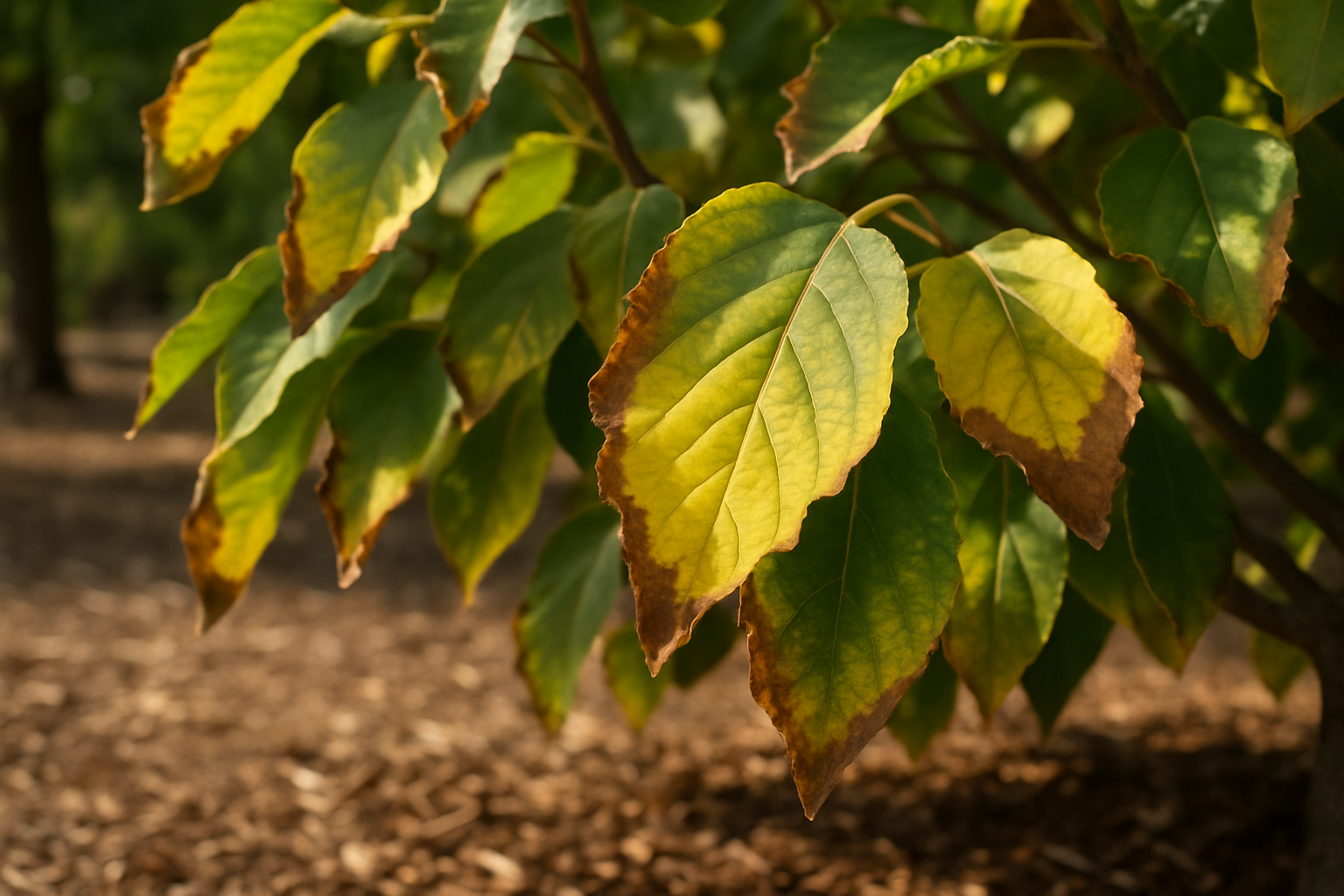
- Leaves turning brown along the edges, also called leaf scorch
- Premature leaf drop before normal fall timing
- A thinning canopy with more visible sky between branches
- Dead, brittle, or hanging limbs
- Cracks in the trunk or major branches
- Fungal growth, mushrooms, or soft wood near the base
- Peeling bark or oozing sap
- Sudden leaning or soil lifting near the roots
Some leaf drop in late summer can be a natural response to heat, but heavy or sudden changes should not be ignored. A stressed tree may still look “mostly okay” while it is losing stored energy and becoming more vulnerable to failure.
Watering Trees in September: More Is Not Always Better
One of the biggest mistakes Houston homeowners make is watering too shallowly. A quick sprinkler run may green up turf, but it often fails to reach deeper tree roots. On the other hand, overwatering can suffocate roots, especially in heavy clay soil.
The goal is slow, deep watering. For many established trees, watering around the drip line—the area under the outer edge of the canopy—is more effective than watering right against the trunk. Young trees usually need more frequent attention because their root systems are still developing.
Helpful September watering tips include:
- Water early in the morning to reduce evaporation.
- Use a slow hose trickle, soaker hose, or deep-root watering method.
- Focus on the root zone, not just the trunk.
- Check soil moisture several inches down before watering again.
- Avoid constantly soggy soil, which can contribute to root rot.
Every property is different. Soil type, slope, drainage, sun exposure, tree species, and irrigation habits all matter. That is why ArborTrue evaluates the full site—not just the visible branches—before recommending a care plan.
Mulch: A Simple Tool That Makes a Big Difference
In Houston’s September heat, mulch acts like insulation for the soil. It helps conserve moisture, moderate soil temperature, and reduce competition from grass around the root zone. However, mulch must be applied correctly.
A healthy mulch ring should be spread in a wide, even layer while keeping mulch away from the trunk. Avoid “mulch volcanoes,” where mulch is piled high against the bark. That traps moisture against the trunk and can encourage decay, pests, and disease.
For many trees, a 2- to 4-inch layer of organic mulch is ideal. As it breaks down, it also improves soil structure over time—something many Houston yards can benefit from.
Pruning During September: Be Careful and Strategic
September is not the time for aggressive, unnecessary pruning. Removing too much live canopy during hot weather can increase stress because the tree loses leaves it needs for energy production and shade. However, selective pruning can be very important if the tree has dead, broken, diseased, or hazardous limbs.
This is especially true during hurricane season. Weak limbs, overextended branches, and storm-damaged trees can create safety risks for homes, vehicles, fences, and people. ArborTrue focuses on proper cuts, canopy structure, and tree health—not quick trimming that leaves trees weaker in the long run.
“ArborTrue helped us understand why our oak was dropping leaves so early in September. They didn’t just trim it—they explained the heat stress, checked the soil, and gave us a plan to help it recover.”
— Local ArborTrue customer in Houston, TX
Houston Tree Stress and Pest Problems
Heat-stressed trees can become more attractive to pests. When a tree is low on energy or struggling to move water, it has fewer natural defenses. In Houston, stressed trees may be more vulnerable to borers, scale insects, aphids, mites, and fungal issues depending on the species and site conditions.
The important thing is to identify the actual cause before treating symptoms. Browning leaves might be drought stress, root damage, disease, pest activity, improper watering, construction injury, or a combination of factors. Spraying or fertilizing without a diagnosis can waste money and sometimes make the situation worse.
ArborTrue takes a practical, observation-based approach. We look at the canopy, bark, soil, drainage, root flare, surrounding landscape, and recent weather patterns before recommending next steps.
Why Choose ArborTrue for Tree Care in Houston?
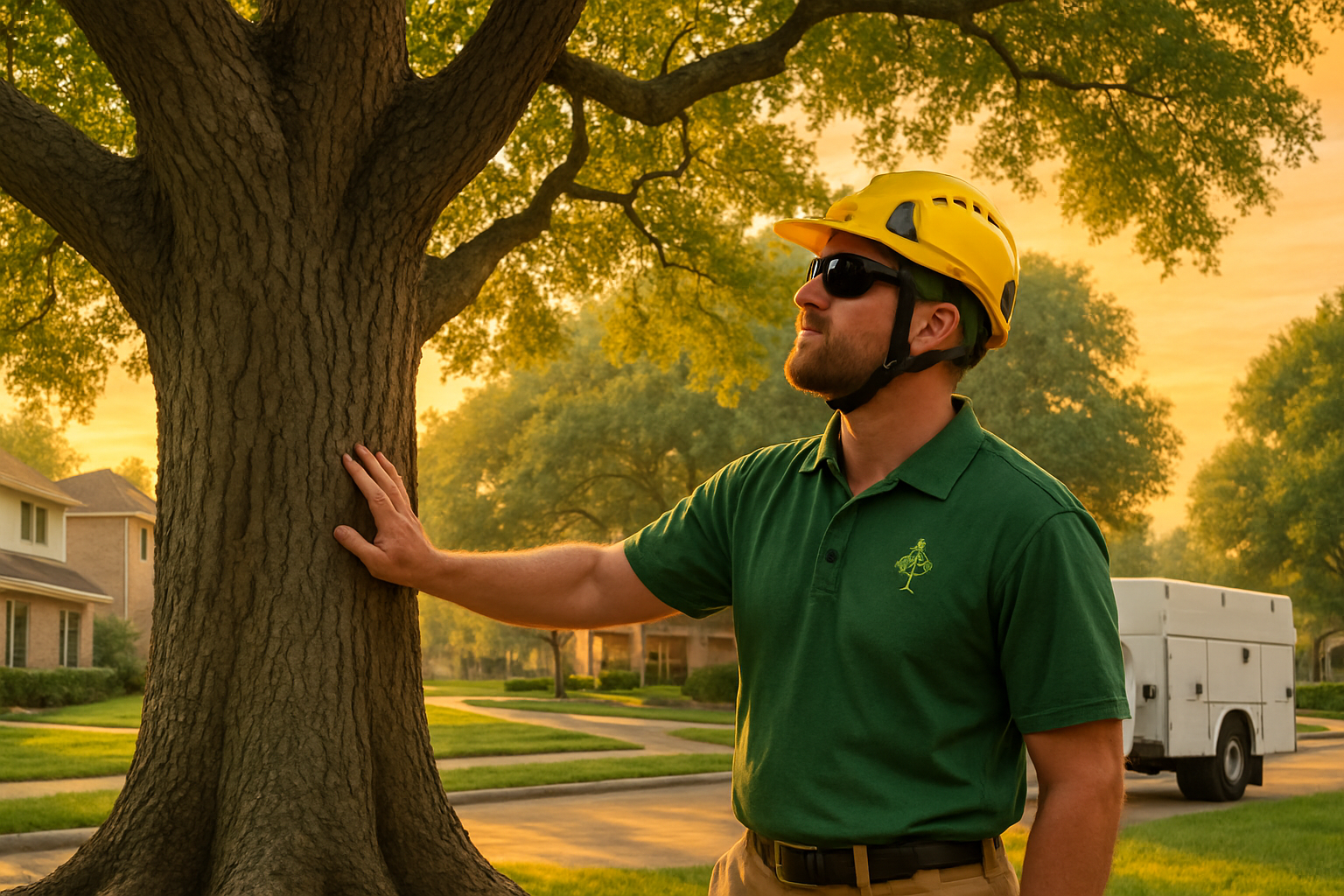
As a Houston-based tree care company, ArborTrue understands that our local trees face a unique mix of heat, humidity, clay soil, tropical weather, and urban stress. We are not offering one-size-fits-all tree work. We provide tree care based on what your property actually needs.
When you call ArborTrue, you can expect:
- Local experience: We know Houston weather patterns, common tree species, and neighborhood soil challenges.
- Honest recommendations: If your tree needs pruning, support, monitoring, or removal, we will explain why.
- Safety-focused service: Tree work near homes, power lines, driveways, and fences requires skill and planning.
- Health-first care: We aim to preserve trees when possible and remove them when they are unsafe or beyond recovery.
- Clear communication: We help you understand what is happening with your trees and how to care for them going forward.
Schedule a September Tree Check Before Stress Gets Worse
September heat can reveal problems that have been building all summer. If your tree is dropping leaves early, showing dead limbs, leaning, thinning out, or just “doesn’t look right,” now is the time to take action. Waiting until a storm exposes a weak branch or a declining tree becomes dangerous can lead to higher costs and greater risk.
ArborTrue is here to help Houston homeowners protect their trees, improve curb appeal, and reduce storm-related hazards. Whether you need a professional tree inspection, selective pruning, tree removal, or a long-term care plan, our team is ready to provide dependable local service.
Contact ArborTrue today to schedule your September tree care visit in Houston, TX. Let us help your trees recover from the heat and prepare for the season ahead.


