
Houston October Tree Care Checklist for Storm Season
October in Houston can feel like a turning point. The worst of the summer heat is usually behind us, but Gulf weather can still bring heavy rain, gusty winds, saturated soil, and late-season tropical systems. At ArborTrue, we see October as one of the most important months for tree care because it gives homeowners a chance to reduce storm risk before winter fronts, cold snaps, and unpredictable fall weather arrive.
As a Houston-based tree care company, we understand the unique challenges our trees face: clay-heavy soils, hurricane-season wind events, drought stress from the summer, sudden downpours, and fast-growing species that can become hazardous if left unchecked. Whether you have live oaks, pecans, pines, magnolias, crape myrtles, or palms, a little preventative attention in October can protect your trees, your home, and your family.
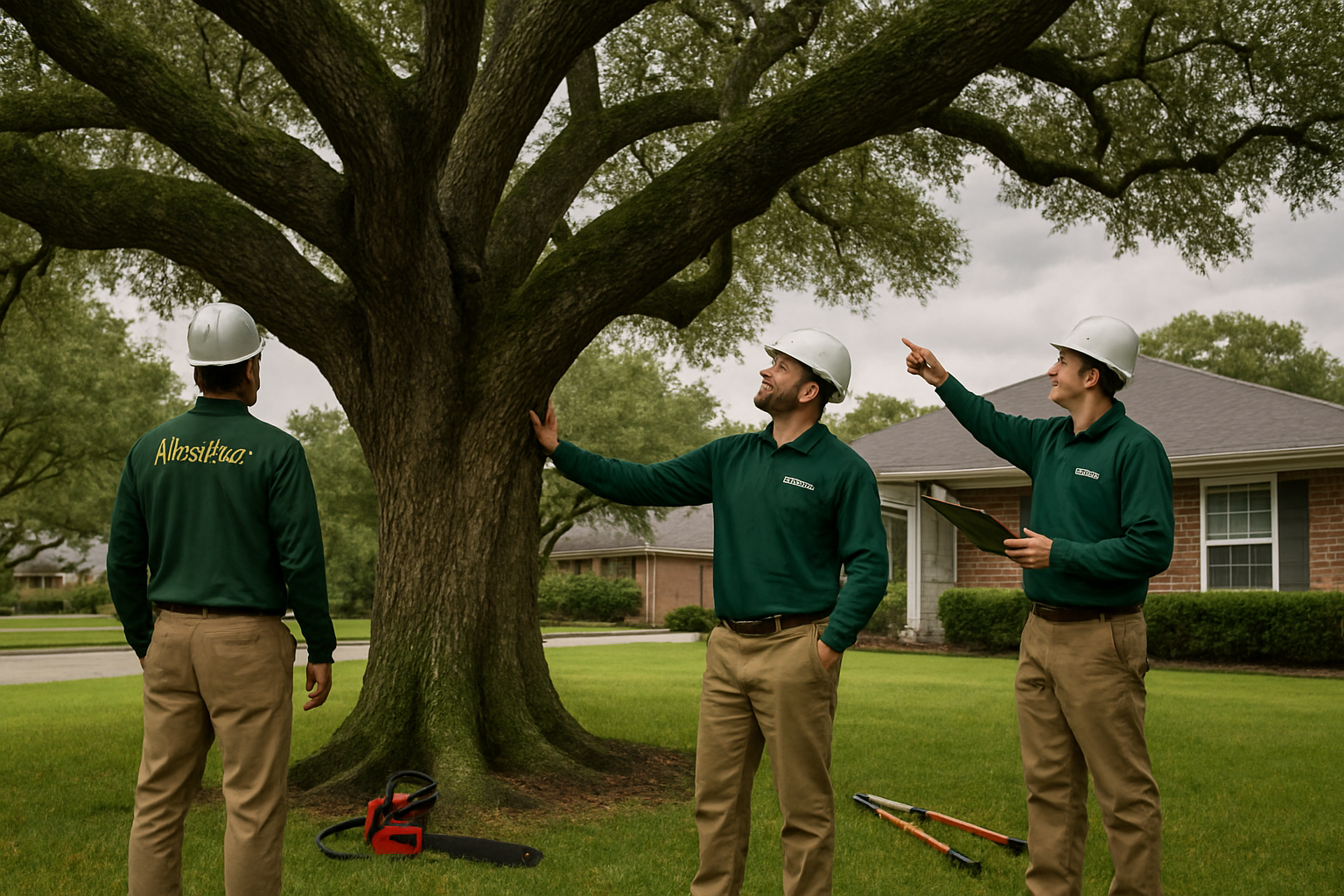
Key Takeaways:
- October is an ideal time in Houston to inspect trees for storm damage, weak limbs, disease, and summer drought stress.
- Proper pruning before strong fall storms can reduce the risk of broken branches, roof damage, and power line hazards.
- Watch for soil saturation, exposed roots, leaning trunks, fungal growth, and canopy thinning after heavy rain or wind.
- Hiring a professional tree care company like ArborTrue helps ensure your trees are evaluated safely and maintained correctly for Houston’s climate.
Why October Tree Care Matters in Houston
Although hurricane season officially runs through November, many homeowners relax once September passes. However, October can still bring tropical moisture, strong thunderstorms, and early cold fronts that create wind shifts and heavy rainfall. In Houston, the combination of wet soil and wind is one of the biggest concerns for tree stability.
When the ground becomes saturated, tree roots may lose some of their grip in the soil. If a tree already has root damage, decay, poor structure, or an unbalanced canopy, even moderate wind can cause large limbs to fail or the entire tree to lean. October inspections help identify these concerns before the next storm system moves in.
Another reason October matters is that many trees are still recovering from summer stress. Houston summers are hot, humid, and often dry between heavy rain events. Drought-stressed trees may drop leaves early, develop dead branches, or become more vulnerable to insects and disease. Fall is the perfect time to evaluate what survived the summer well and what needs care.
Your October Tree Care Checklist
Use this checklist to walk your property safely from the ground. Do not climb trees or attempt to remove large limbs yourself, especially if they are near your roof, driveway, fence, or utility lines.
- Look for dead, broken, or hanging branches. These are among the most likely to fall during a storm.
- Check for limbs touching your roof. Branches rubbing shingles can cause roof damage and give pests a pathway into your home.
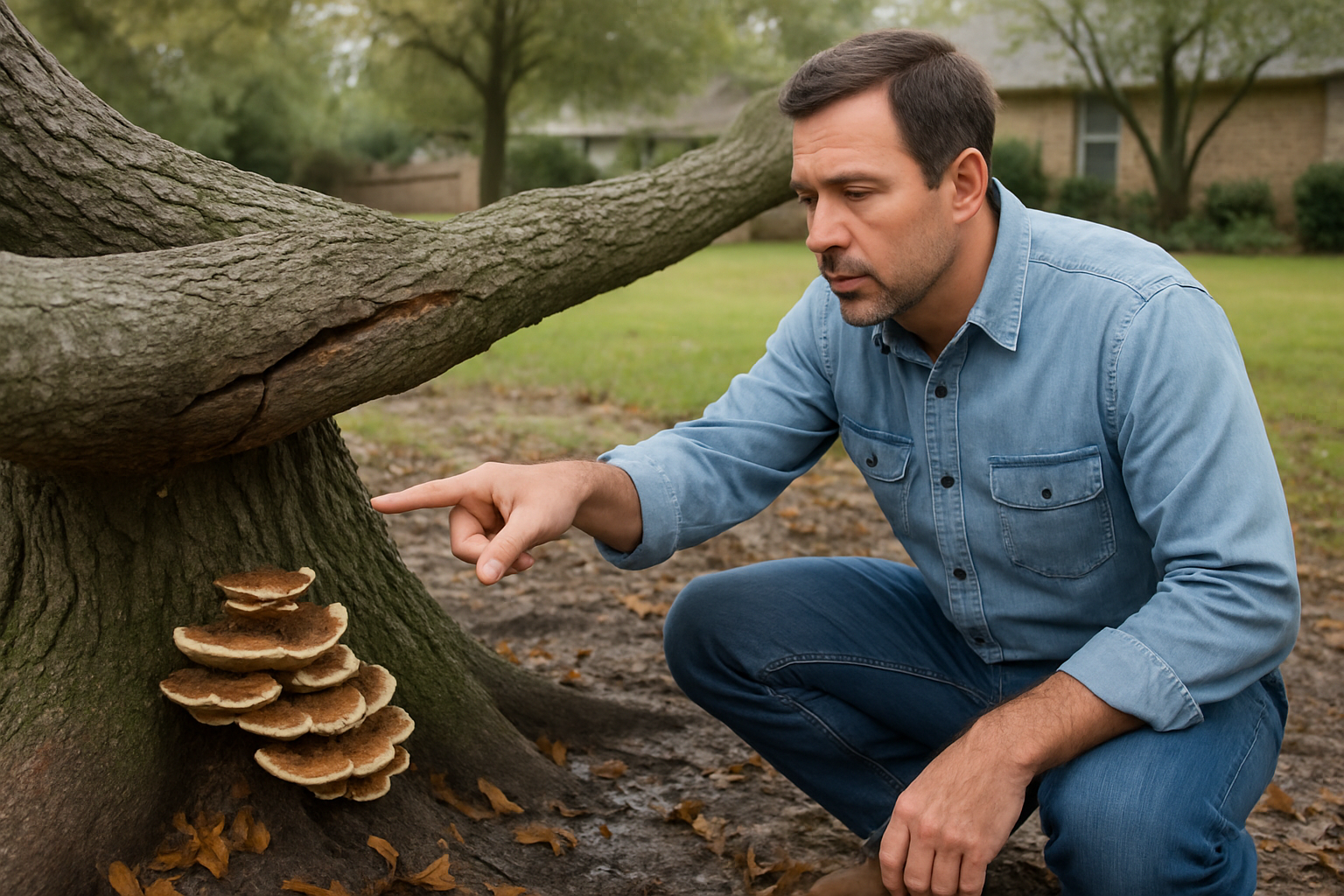
- Inspect the trunk for cracks or cavities. Open wounds, hollow areas, and splitting bark can indicate structural weakness.
- Watch for mushrooms or fungal growth. Fungi near the base of a tree may be a sign of internal decay or root issues.
- Notice leaning trees. A new or worsening lean after rain or wind should be evaluated quickly.
- Look at the canopy. Sparse leaves, dead tips, or uneven growth may signal disease, pest activity, or root stress.
- Check soil and drainage. Standing water around tree roots can weaken trees over time, especially in Houston’s clay soils.
If you see any of these warning signs, it is time to call a professional. Tree problems rarely improve on their own, and waiting until after a storm often means dealing with emergency removal, property damage, or insurance headaches.
Pruning Before Storms: What to Do and What to Avoid
Pruning is one of the best ways to reduce storm damage, but only when it is done correctly. Poor pruning can weaken a tree, create decay points, and make future storm failure more likely. At ArborTrue, we focus on selective pruning that improves structure while preserving the health and natural form of the tree.
For October storm preparation, pruning often includes removing deadwood, reducing overly heavy limbs, clearing branches away from structures, and improving airflow through dense canopies. The goal is not to “top” a tree or strip it bare. In fact, topping is one of the worst things you can do to a tree because it encourages weak regrowth and increases long-term risk.
- Do remove dead, diseased, or damaged limbs.
- Do thin crowded areas carefully to reduce wind resistance.
- Do create clearance from roofs, gutters, driveways, and walkways.
- Do not top trees or cut large limbs without a proper plan.
- Do not over-prune before storm season. Removing too much canopy can stress the tree.
- Do not prune near power lines. This should always be handled by qualified professionals or the utility provider.
“ArborTrue helped us identify two large limbs over our garage that we never realized were cracked. They pruned the tree safely before the next storm rolled through, and we had real peace of mind.”
— Local ArborTrue customer in Houston, TX
Pay Attention to Houston’s Clay Soil
Tree care in Houston is not just about what you can see above ground. Our soil plays a major role in tree health. Much of the Houston area has heavy clay soil that expands when wet and shrinks when dry. After a hot summer, October rain can cause rapid soil changes around roots. This movement can stress trees, especially younger trees or trees with limited root systems.
Mulching is one simple way to help. A proper mulch ring helps regulate soil temperature, retain moisture, and reduce competition from grass. However, mulch should never be piled against the trunk. That “mulch volcano” effect can trap moisture, encourage decay, and invite pests.
For best results, apply a two- to three-inch layer of mulch around the tree’s root zone, keeping it a few inches away from the trunk. This is especially helpful going into the cooler months when trees need stable soil conditions to recover and prepare for spring growth.
Storm Prep Around Your Home
October is also a smart time to look at how trees interact with your home and property. Branches overhanging your roof, pool, patio, or driveway can create hazards during storms. Leaves and small limbs can clog gutters, causing water to back up and damage fascia boards or roofing materials.
Here are a few practical storm-prep steps for Houston homeowners:
- Clear low-hanging limbs from walkways, driveways, and entrances.
- Schedule professional pruning for large branches over your home or garage.
- Remove dead or declining small trees before they become emergency hazards.
- Check trees near fences, sheds, and outdoor living spaces.
- Clean gutters after heavy leaf drop or pruning work.
- Document tree conditions with photos before major storms for insurance records.
These simple steps can make a major difference when high winds and heavy rain arrive. Preventative tree care is almost always more affordable than emergency response after a limb crashes down.
Signs You May Need Tree Removal
At ArborTrue, we love saving trees whenever possible. Healthy, mature trees add shade, beauty, curb appeal, and value to your property. However, some trees become too hazardous to keep, especially going into storm season.
You may need a professional removal evaluation if a tree has severe trunk decay, major root damage, a strong lean toward your home, repeated large limb failures, extensive disease, or storm damage that cannot be corrected with pruning. Removal is always a serious decision, but safety must come first.
Our team can help you understand whether a tree can be preserved, pruned, braced, monitored, or removed. We do not believe in unnecessary removals, but we also will not ignore a dangerous situation.
Why Choose ArborTrue for October Tree Care in Houston?
When you hire ArborTrue, you are hiring a local team that understands Houston trees, Houston weather, and Houston homeowners. We know what Gulf Coast storms can do, and we know how quickly tree problems can escalate when they are overlooked.
Our approach is practical, honest, and safety-focused. We inspect your trees carefully, explain what we see, and recommend the right solution for your property. Whether you need seasonal pruning, storm-risk assessment, deadwood removal, tree removal, or general tree health guidance, ArborTrue is ready to help.
Customers choose ArborTrue because we offer:
- Local Houston knowledge of regional tree species, soil conditions, and storm patterns.
- Safety-first service for homes, families, crews, and surrounding property.
- Clear communication before, during, and after the job.
- Professional equipment and techniques designed for efficient, careful tree work.
- Honest recommendations focused on long-term tree health and property protection.
Schedule Your October Tree Inspection
October is the right time to prepare your trees for the rest of storm season and the cooler months ahead. Do not wait until a branch is on your roof or a tree is leaning after a downpour. A proactive inspection from ArborTrue can help you spot risks early, protect your property, and keep your landscape healthy.
If you are in Houston or the surrounding area, contact ArborTrue today to schedule your October tree care service. We would be proud to help you prepare your trees for whatever Gulf Coast weather brings next.


