
How to Reduce the Risk of Falling Limbs Around Your Houston Property This October
October in Houston is a welcome shift. The worst of the summer heat starts to ease, evenings feel a little more comfortable, and many homeowners finally get back outside to enjoy their yards. But October is also a smart time to take a closer look at your trees. After months of Gulf Coast heat, drought stress, heavy summer storms, and sudden downpours, limbs can weaken in ways that are not always obvious from the ground.
At ArborTrue, we work with Houston homeowners who want beautiful, healthy trees without the worry of falling branches over driveways, roofs, fences, play areas, or power lines. While no tree can ever be made completely “storm-proof,” proactive tree care can greatly reduce the risk of limb failure and help protect your property before the next cold front, thunderstorm, or windy fall weather system moves through.
Key Takeaways:
- Inspect your trees in October for dead limbs, cracks, hanging branches, and storm damage left behind from summer weather.
- Schedule professional pruning before weak limbs become a hazard over roofs, cars, patios, walkways, or utility areas.
- Watch for signs of tree stress common in Houston, including drought damage, fungal growth, decay, and sudden leaf drop.
- Choose a qualified local tree care company that understands Houston’s climate, soil, storm patterns, and tree species.
Why Falling Limbs Are a Bigger Concern in Houston During October
Houston trees go through a lot before October arrives. Our long growing season, high humidity, clay soils, intense summer heat, tropical moisture, and occasional severe storms can all contribute to hidden stress. By fall, some branches may be weakened even if the tree still looks green and full.
October can also bring quick weather changes. One week may feel warm and humid, while the next may bring a strong front with gusty winds and heavy rain. These conditions can expose weak attachments, deadwood, or overextended limbs that have been quietly declining all summer.
Common October-related tree risks in the Houston area include:
- Dead or brittle limbs caused by summer heat stress or drought conditions.
- Cracked branches from previous storms that may finally fail during windy weather.
- Heavy canopies that catch wind and put added pressure on weak branch unions.
- Fungal decay that spreads in Houston’s humid conditions and weakens wood from the inside.
- Low-hanging limbs over roofs, vehicles, sidewalks, fences, and outdoor living areas.
Start With a Ground-Level Tree Inspection
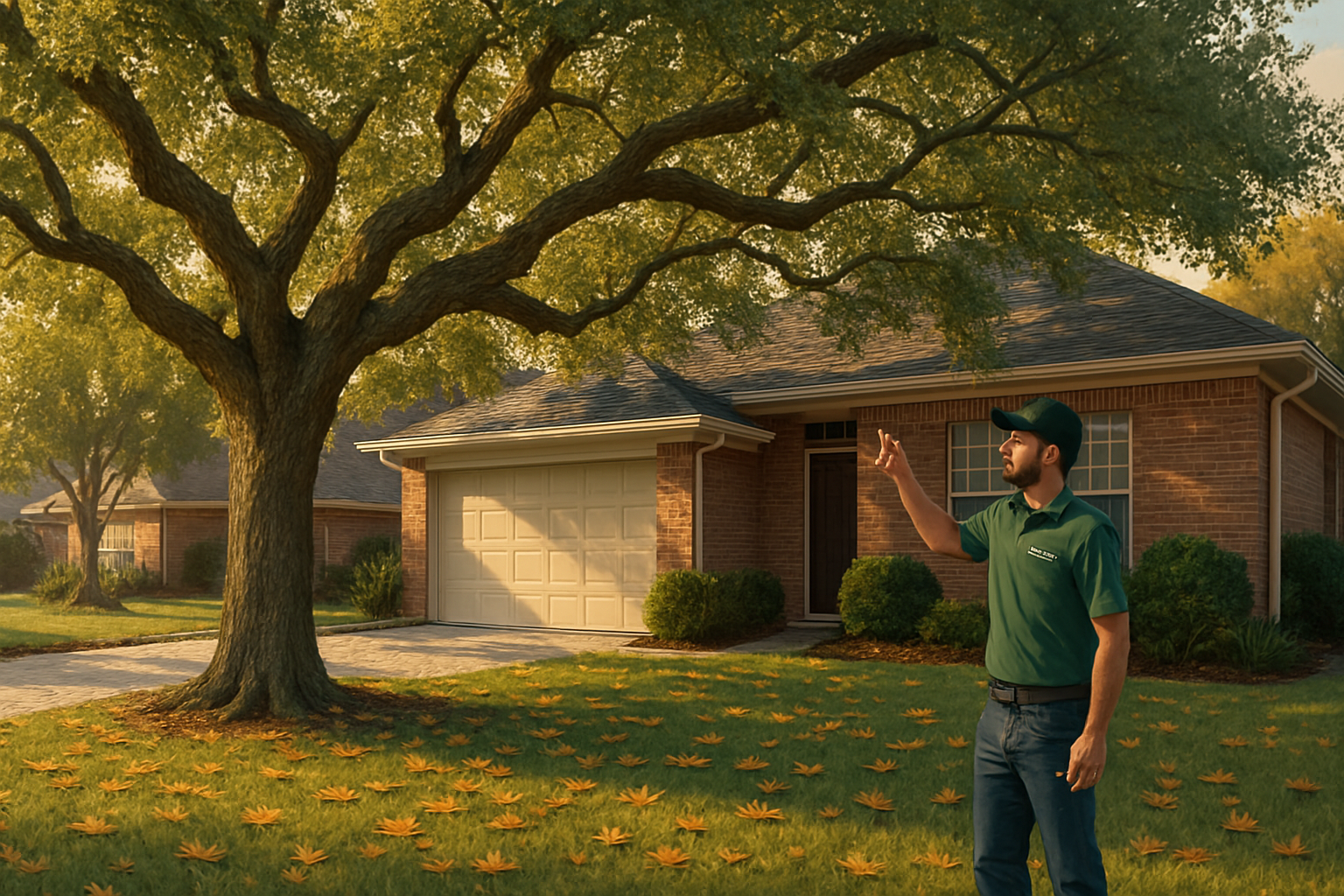
You do not have to climb a tree to notice potential warning signs. In fact, you should not climb a tree or attempt to inspect high limbs yourself. A simple visual check from the ground can help you decide when it is time to call a professional.
Walk around your property and look carefully at trees near your home, garage, driveway, patio, pool, children’s play area, and street. Pay special attention to large trees such as live oaks, water oaks, pecans, pines, elms, and other common Houston-area species.
Look for these warning signs:
- Dead branches with no leaves while the rest of the tree is still green.
- Limbs hanging lower than usual or resting on other branches.
- Cracks, splits, or peeling bark on large limbs.
- Mushrooms or fungal growth near the trunk, roots, or branch unions.
- Branches touching the roof, gutters, siding, or utility lines.
- Sawdust, cavities, holes, or signs of insect activity.
- Large limbs extending too far from the trunk without proper structure.
If you see any of these issues, it is best to have the tree evaluated before the next round of windy weather. A limb that looks “fine for now” can become a serious hazard once rain adds weight or gusts begin moving the canopy.
Pruning Is One of the Best Ways to Reduce Limb Failure
Proper pruning is more than making a tree look neat. It is a safety-focused service that improves structure, removes hazardous wood, and helps the tree distribute weight more effectively. For Houston properties, October is often a practical time to address problem limbs because homeowners are spending more time outside and preparing their yards for the cooler months.
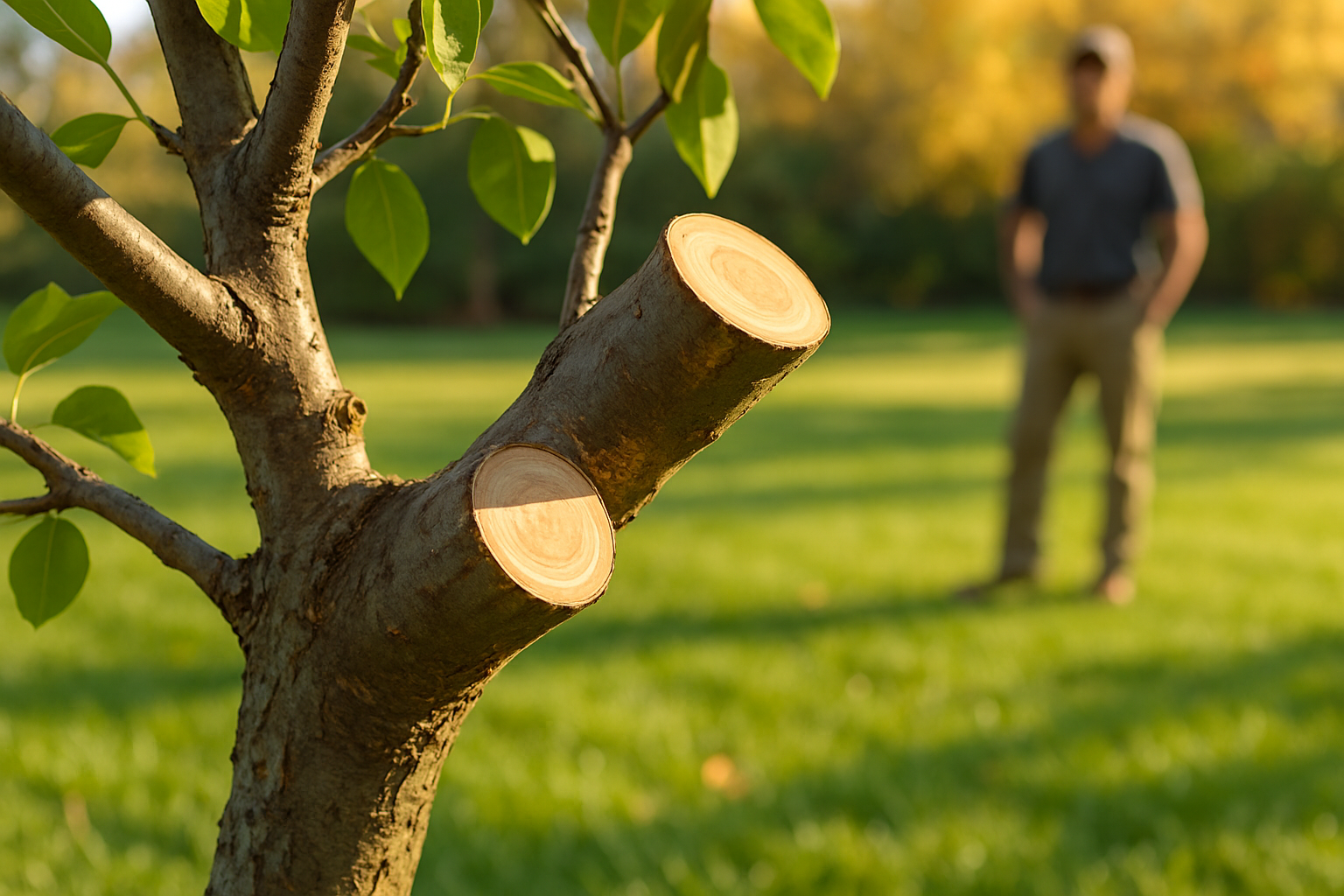
Professional pruning may include removing deadwood, reducing excessive end weight, clearing limbs away from structures, improving canopy balance, and correcting weak or crowded branch growth. The goal is not to over-prune or “top” the tree. In fact, improper cutting can make a tree more dangerous by encouraging weak regrowth and creating large wounds.
“After a summer storm cracked a limb over our driveway, ArborTrue came out, explained what needed to be removed, and helped us feel confident that our oak was safer without being over-cut.”
— Local ArborTrue customer in Houston, TX
Do Not Ignore Limbs Over Your Roof, Driveway, or Outdoor Spaces
Some limbs are more urgent than others. A dead branch at the far edge of the yard may be less concerning than a large, stressed limb hanging directly above a bedroom, parked vehicle, walkway, or backyard seating area. When evaluating risk, location matters.
Branches over high-use areas should be reviewed regularly, especially after storms. In October, many Houston families are grilling, decorating for fall, getting ready for Halloween, and hosting guests outside again. That means patios, porches, sidewalks, and driveways see more activity.
Priority areas to check include:
- Branches above roofs, chimneys, skylights, and gutters.
- Limbs over driveways or regular parking spots.
- Trees near backyard patios, decks, pools, and playsets.
- Branches growing near service drops or utility lines.
- Large limbs over sidewalks, entryways, gates, and fences.
If a limb is close to power lines, do not attempt to trim it yourself. Utility-related pruning requires specialized training and safe procedures. Call a professional tree service or your utility provider for guidance.
Healthy Trees Are Safer Trees
Reducing falling limb risk is not only about removing bad branches. It is also about supporting the overall health of the tree. Stressed trees are more likely to shed limbs, attract pests, develop decay, or fail during storms.
Houston’s clay soil can create challenges for root systems. Periods of drought followed by heavy rain cause soil to shrink and swell, which can stress roots and affect tree stability. Mulching, proper watering, and avoiding root damage can all help your trees remain stronger heading into fall and winter.
Good tree health practices include:
- Adding mulch around the base of the tree while keeping it away from the trunk flare.
- Watering deeply during dry October periods, especially for younger or stressed trees.
- Avoiding soil compaction from parked vehicles, equipment, or heavy foot traffic.
- Keeping lawn equipment from striking trunks and exposed roots.
- Scheduling routine inspections for mature trees or trees with a history of damage.
Why You Should Avoid DIY Limb Removal
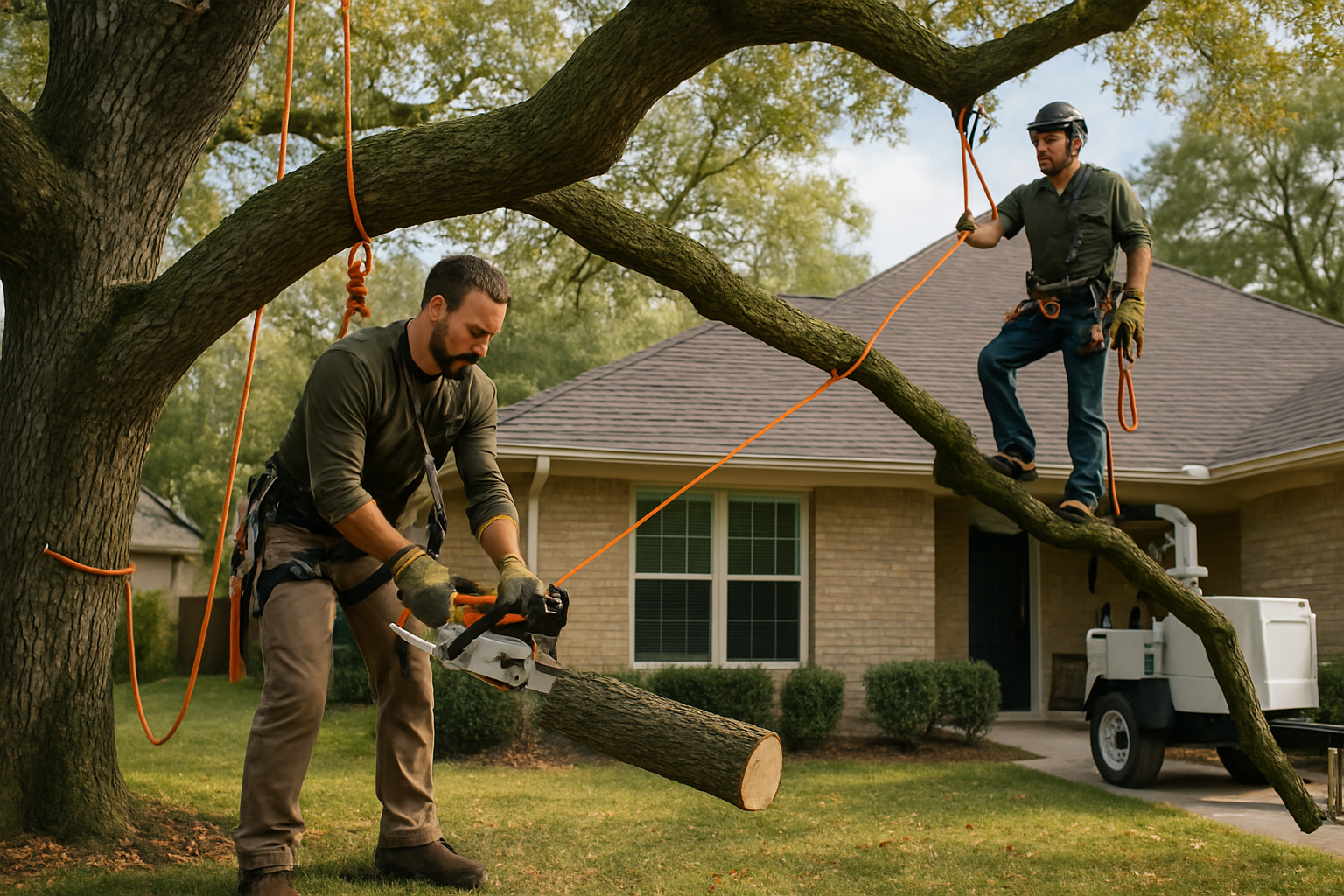
It can be tempting to grab a ladder and saw when you see a problem branch. But tree work is one of the most dangerous home maintenance tasks, especially when limbs are large, under tension, or located near structures. A branch can twist, split, swing, or fall in an unexpected direction. Ladders, chainsaws, and unstable limbs are a dangerous combination.
Professional crews use the right equipment, rigging methods, cutting techniques, and safety procedures to remove hazardous limbs with control. At ArborTrue, we approach each property with a plan that considers the tree, the surrounding structures, the crew’s safety, and the long-term health of the landscape.
Why Choose ArborTrue for Tree Care in Houston?
As the owner of ArborTrue, I know our customers are not just looking for someone with a chainsaw. They want a dependable local team that understands Houston trees, respects their property, and gives honest recommendations. That is exactly how we operate.
Houston’s trees face unique challenges, from humid weather and sudden storms to dense neighborhoods, aging live oaks, fast-growing species, and heavy clay soils. ArborTrue brings local knowledge and practical experience to every job. We do not believe in unnecessary cutting or one-size-fits-all recommendations. Our goal is to make your trees safer, healthier, and better suited to your property.
Customers choose ArborTrue because we provide:
- Local Houston experience with the tree species and weather patterns common to our area.
- Safety-focused service for limbs near homes, vehicles, fences, and outdoor spaces.
- Honest recommendations based on tree health, risk, and property needs.
- Professional cleanup so your yard is left neat after the work is complete.
- Respect for your trees with pruning practices that avoid harmful over-cutting.
Schedule Your October Tree Check Before the Next Storm
October is one of the best times for Houston homeowners to step outside, look up, and ask: “Are these trees ready for the next round of wind and rain?” If you see dead limbs, heavy overhangs, cracks, or branches too close to your home, do not wait until they fall.
ArborTrue is here to help you reduce the risk of falling limbs, protect your property, and care for the trees that make your landscape beautiful. Whether you need a safety inspection, professional pruning, storm damage cleanup, or guidance on a mature tree, our team is ready to serve you.
Contact ArborTrue today to schedule your October tree care service in Houston, TX, and enjoy your property with greater peace of mind this fall.


