
Storm Prep Tips for Houston Trees Before Fall Weather Arrives
September in Houston is a transition month—but it is not exactly “quiet.” As summer heat lingers, the Gulf is still warm, humidity remains high, and late-season tropical systems can quickly send bands of heavy rain and wind across the area. For homeowners in Houston, that means now is the time to look up, walk your property, and make sure your trees are ready for fall weather.
At ArborTrue, we have seen how a healthy, well-maintained tree can ride out a storm—and how a neglected one can become a serious hazard. Broken limbs, uprooted trees, and storm-damaged canopies can put roofs, vehicles, fences, and power lines at risk. The good news is that many tree-related storm problems can be reduced with smart preparation before severe weather arrives.
Key Takeaways:
- Schedule a professional tree inspection before fall storms to identify weak limbs, decay, poor structure, and root problems.
- Prune strategically—do not over-thin or “hurricane cut” trees, which can make them weaker in high winds.
- Clear deadwood, monitor soil saturation, and keep trees away from roofs, driveways, and utility lines.
- Choose a Houston-based tree care company like ArborTrue that understands local species, clay soils, Gulf weather, and storm risk.
Why September Tree Care Matters in Houston
Houston weather in September can be unpredictable. One week may feel like peak summer, while the next brings heavy thunderstorms, tropical moisture, or strong gusts from a passing Gulf system. Even when a storm does not make direct landfall, our area can experience saturated soil, sudden wind bursts, and localized flooding.
That combination is tough on trees. When soil becomes waterlogged, tree roots can lose stability. If the canopy is dense, unbalanced, or full of dead limbs, the tree may catch more wind than it should. In many cases, storm damage is not caused by one factor—it is the result of several small problems that have been building for months or years.
Common September tree concerns in the Houston area include:
- Dead or cracked limbs hidden inside dense summer foliage
- Heavy canopies that have not been properly pruned
- Root stress from drought followed by sudden heavy rain
- Fungal issues encouraged by humidity and wet conditions
- Leaning trees in saturated clay soil
- Branches growing too close to homes, garages, fences, or service lines
Start With a Ground-Level Tree Inspection
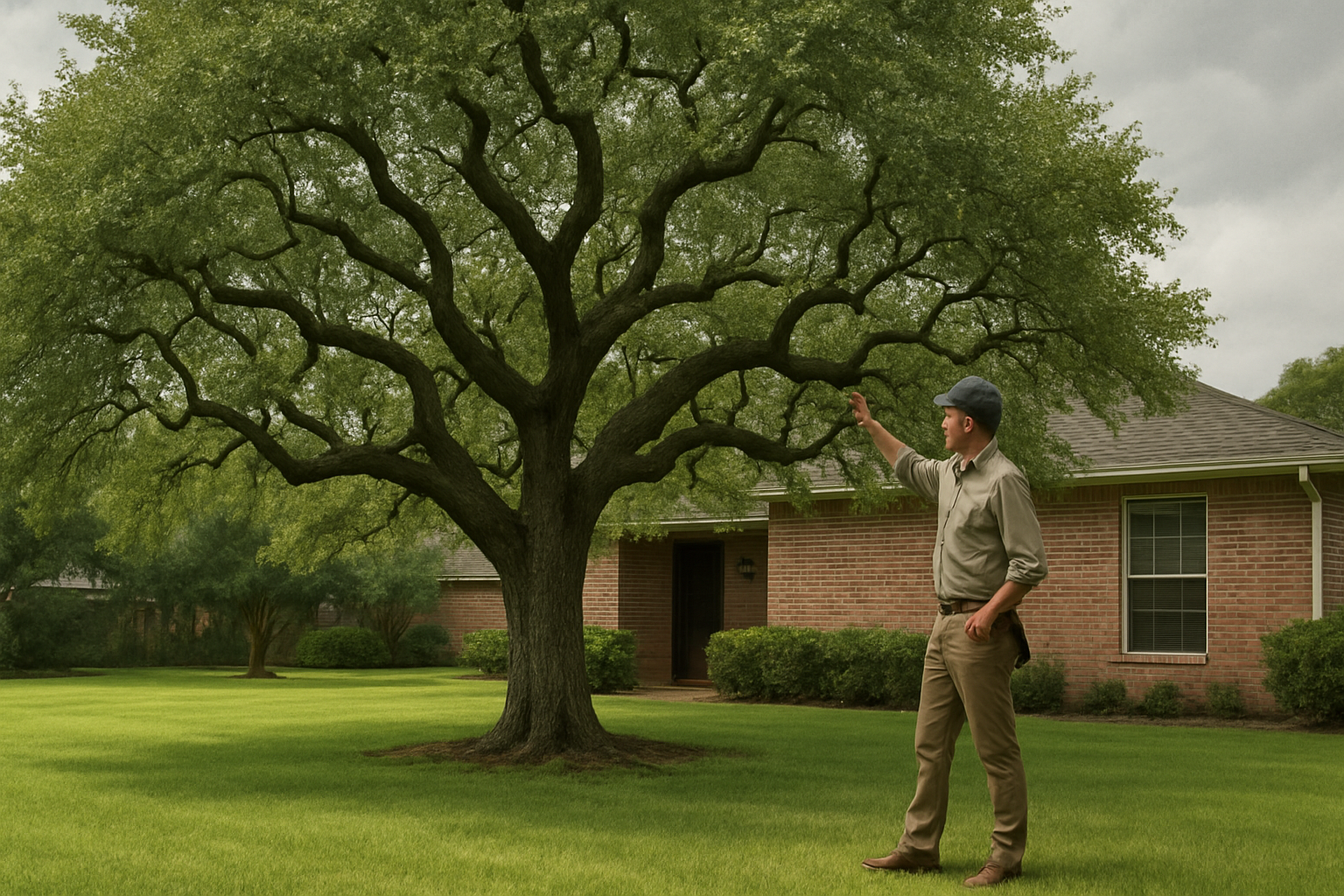
Before fall storms pick up, walk around your property and inspect your trees from the ground. You do not need to climb, and you should never attempt to inspect near power lines. Instead, look for visible warning signs that a professional arborist should evaluate.
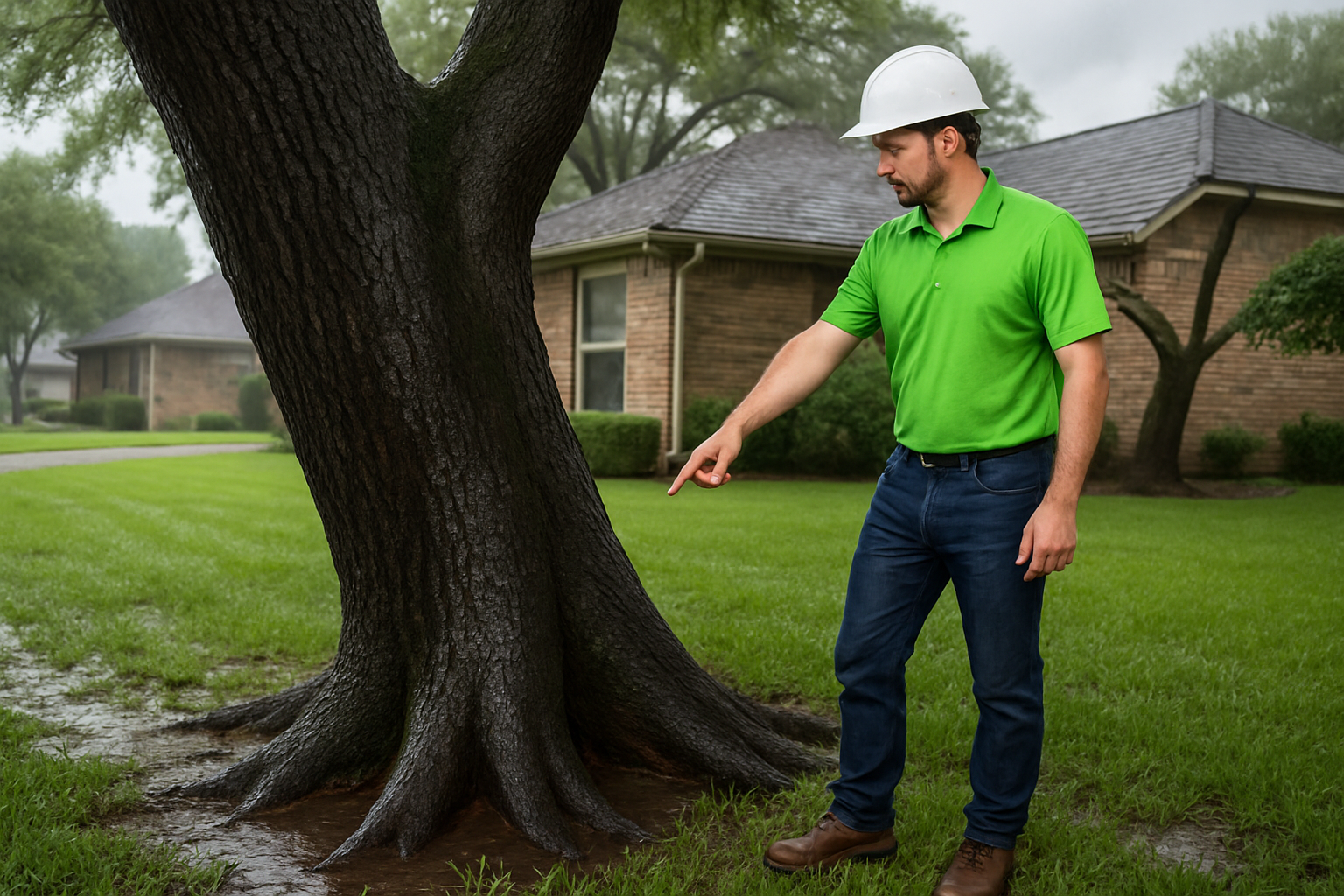
Pay close attention to the trunk, canopy, and root flare—the area where the trunk meets the soil. Many tree failures begin with problems that are visible before a storm ever arrives.
- Large dead branches or hanging limbs
- Cracks or splits in the trunk or major limbs
- Mushrooms or fungal growth near the base of the tree
- Fresh leaning, especially after recent rain
- Cavities, soft spots, or peeling bark
- Branches rubbing against each other or against the roof
- Soil lifting around the roots
If you notice any of these signs, it is worth scheduling a professional tree assessment. A trained eye can often tell the difference between a tree that simply needs pruning and a tree that may pose a real safety concern.
Prune for Strength, Not Just Appearance
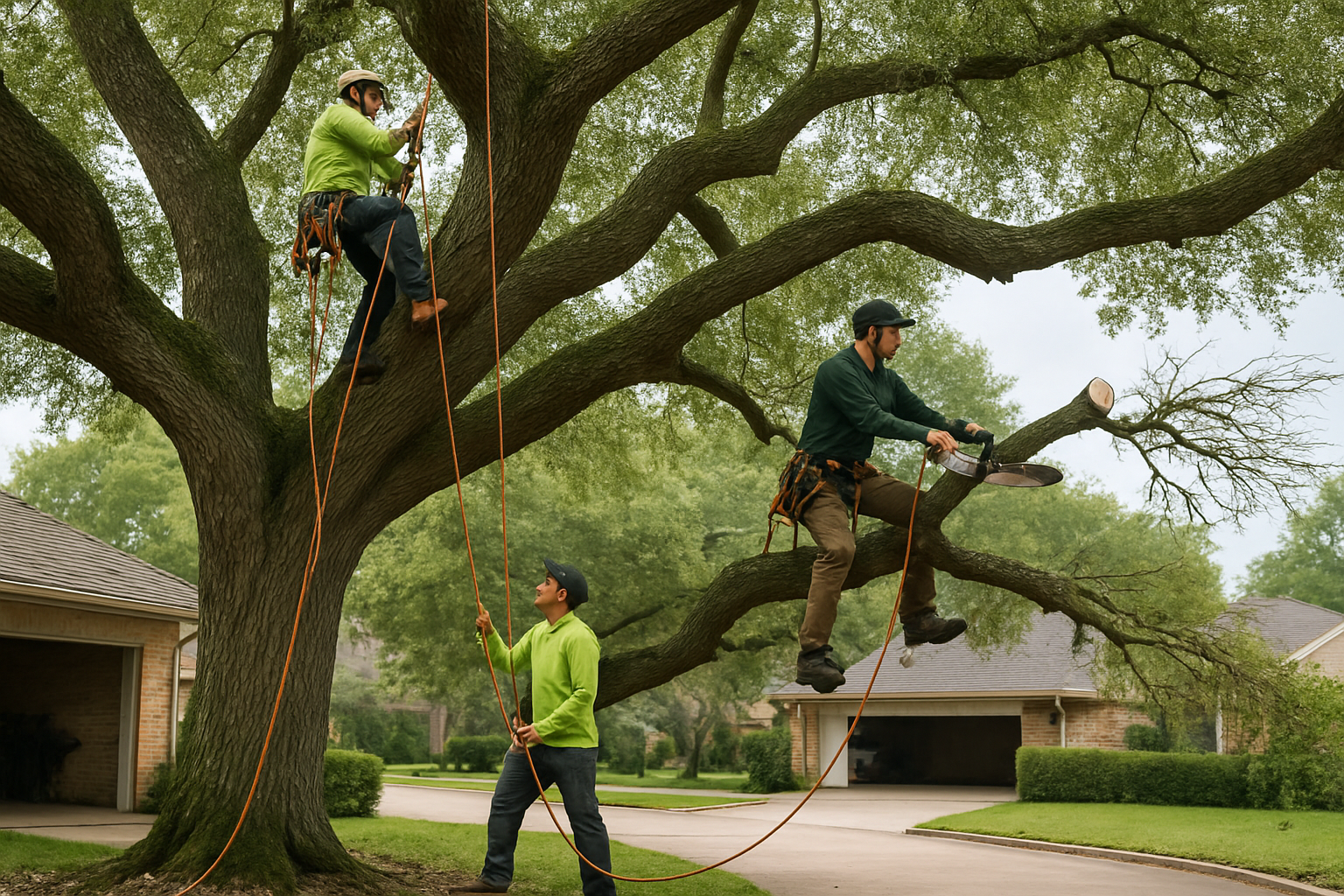
Proper pruning is one of the best ways to prepare Houston trees for storm season. The goal is not to strip the tree bare or remove as much growth as possible. In fact, aggressive over-pruning can make a tree more vulnerable. A healthy canopy needs balance, structure, and enough foliage to support the tree’s energy production.
Storm-prep pruning should focus on:
- Removing dead, diseased, or broken branches
- Reducing excessive end weight on long limbs
- Improving clearance from roofs, gutters, and structures
- Correcting crossing or rubbing branches
- Improving overall canopy balance
- Reducing risk while preserving the tree’s natural form
In Houston, we commonly work with live oaks, water oaks, pecans, elms, pines, crepe myrtles, and palms—each with its own pruning needs. A cut that is helpful for one species may be harmful for another. That is one reason professional tree care matters.
“ArborTrue helped us identify two large limbs over our roof that we never realized were compromised. They pruned the tree properly without making it look bare, and we felt much more prepared heading into storm season.”
— ArborTrue customer in West Houston
Avoid the “Hurricane Cut” Myth
One of the biggest mistakes we see before storm season is excessive canopy thinning, sometimes called a “hurricane cut.” The idea is that removing a large amount of foliage lets wind pass through the tree. Unfortunately, too much thinning can reduce the tree’s natural wind resistance and encourage weak, fast-growing sprouts later.
A properly pruned tree should still look like a tree. It should have a balanced canopy, strong branch attachments, and healthy foliage. The best storm preparation is selective and strategic—not drastic.
Watch the Soil: Houston Clay and Heavy Rain
Houston’s clay-heavy soils can shift quickly between dry and saturated conditions. After a hot summer, trees may already be stressed from heat, compacted soil, or inconsistent moisture. Then September storms can bring intense rainfall in a short period of time, softening the ground and increasing the risk of root instability.
To help your trees before heavy fall rain:
- Keep mulch around the root zone, but do not pile it against the trunk
- Avoid parking vehicles or storing materials over tree roots
- Improve drainage where water stands for long periods
- Water deeply during dry spells, especially for younger trees
- Do not add heavy soil or landscaping material over exposed roots
A 2–3 inch mulch layer can help regulate soil moisture and temperature, but mulch should be shaped like a wide ring—not a volcano. Mulch piled against the trunk can trap moisture and invite decay.
Clear Rooflines, Gutters, and Driveways
Tree limbs do not have to be dead to cause damage. Branches that hang over shingles, scrape siding, or press into gutters can become trouble during wind and rain. Even small limbs can damage roofing materials over time, while larger limbs can break during storms and create costly repairs.
Before fall weather arrives, look for branches that are:
- Touching or rubbing against the roof
- Hanging over parked vehicles or driveways
- Blocking visibility near sidewalks or streets
- Growing into gutters or roof valleys
- Interfering with outdoor lighting or security cameras
For branches near utility lines, do not attempt the work yourself. Always call the appropriate utility provider or a qualified tree care professional. Safety should come first.
Know When Removal May Be the Safest Option
At ArborTrue, we value trees. Removal is never our first recommendation when a tree can be safely preserved. However, some trees become too compromised to remain in place—especially before storm season.
Tree removal may need to be considered if a tree has severe trunk decay, major root failure, advanced disease, a dangerous lean, or repeated large limb failures. In these cases, waiting until after a storm can be more expensive and more dangerous than handling the issue proactively.
If you are unsure whether a tree can be saved, our team can assess the structure, location, species, and risk factors to help you make an informed decision.
Why Choose ArborTrue for Houston Storm Prep?
As a Houston tree care company, ArborTrue understands the conditions our trees face: Gulf humidity, intense summer heat, sudden downpours, tropical wind events, compacted urban soils, and fast-growing landscapes. We are not guessing based on generic tree advice—we work with Houston trees every day.
When you choose ArborTrue, you get a team focused on safety, tree health, and honest recommendations. Our goal is to help you protect your property while preserving strong, beautiful trees whenever possible.
Homeowners choose ArborTrue because we offer:
- Local knowledge of Houston-area tree species and weather patterns
- Professional pruning focused on structure, health, and storm resilience
- Honest assessments instead of unnecessary removals
- Safe work practices around homes, fences, driveways, and landscapes
- Clear communication before, during, and after the job
- Responsive service when storm concerns cannot wait
We know that tree work can feel overwhelming, especially when storms are in the forecast. Our team is here to make the process straightforward. We can inspect your trees, explain what we see, prioritize the most urgent concerns, and complete the work with care.
Schedule Tree Storm Prep Before the Weather Turns
The best time to prepare your trees is before the next storm watch appears on the news. Once severe weather is approaching, schedules fill quickly, emergency work becomes more common, and some issues may be too risky to address safely.
September is an ideal time for Houston homeowners to take action. By pruning weak limbs, checking for structural concerns, improving clearance, and monitoring soil conditions, you can reduce risk and head into fall with greater peace of mind.
If you are concerned about a tree on your property—or if it has simply been a while since your last inspection—ArborTrue is ready to help. Contact us today to schedule a professional tree evaluation and storm-prep service for your Houston home.
Protect your trees. Protect your property. Trust ArborTrue for Houston tree care before fall weather arrives.


