
Best Ways to Protect Trees During Houston Drought Conditions in August
August in Houston can be tough on trees. Between triple-digit heat indexes, long stretches without meaningful rainfall, compacted clay soils, and high humidity that stresses both people and plants, your trees may be working harder than you realize just to survive. At ArborTrue, we see it every summer: live oaks dropping leaves early, young trees wilting by mid-afternoon, pines browning from the top down, and stressed trees becoming more vulnerable to pests and disease.
The good news is that many drought-related tree problems can be prevented or reduced with the right care plan. As a Houston-based tree care company, ArborTrue understands our local climate, soil conditions, tree species, and seasonal risks. Here are the best ways to protect your trees during Houston drought conditions—and why calling a professional can save you money, stress, and possibly the tree itself.
Key Takeaways:
- Water deeply, not daily: Houston trees benefit most from slow, deep watering near the drip line, especially during August drought conditions.
- Mulch matters: A proper mulch ring helps retain soil moisture, regulate root temperature, and reduce competition from grass.
- Watch for stress signs: Wilting leaves, early leaf drop, browning edges, and branch dieback can indicate drought damage or deeper health issues.
- Avoid unnecessary pruning: Heavy pruning during drought can increase stress unless dead or hazardous limbs need to be removed.
- Call ArborTrue early: Professional inspection can identify drought stress, pests, disease, and structural concerns before they become costly emergencies.
Why August Drought Conditions Are So Hard on Houston Trees
Houston summers are unique. Even when humidity is high, trees can still experience drought stress if soil moisture is low. Our heavy clay soils can make the problem worse. Clay may hold water well after a rain, but during dry periods it can become compacted and hard, making it difficult for oxygen and moisture to reach tree roots.
August weather in Houston often brings:
- Extended periods of extreme heat
- High evaporation rates from soil and turf
- Little or inconsistent rainfall
- Heat stress from pavement, driveways, and buildings
- Dry, compacted soil around root zones
- Increased pest activity on weakened trees
When trees do not receive enough water, they may close their leaf pores to conserve moisture. This slows growth and reduces the tree’s ability to cool itself. Over time, drought stress can weaken the tree’s natural defenses, making it more likely to suffer from borers, fungal issues, root damage, or limb failure.
Water the Right Way: Deep and Slow
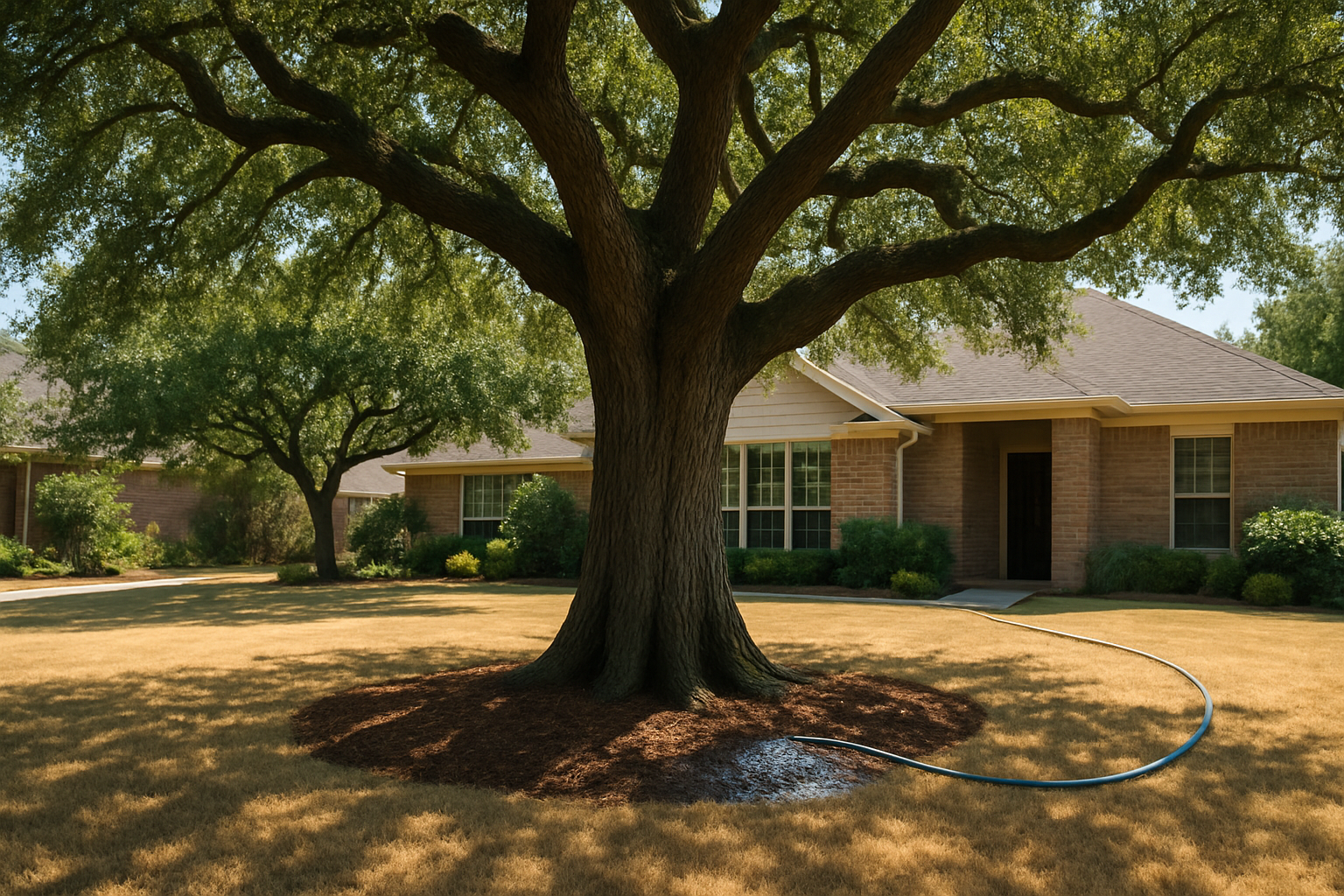
One of the biggest mistakes homeowners make during drought is watering too lightly. A quick spray from a sprinkler may green up the lawn, but it usually does not reach the deeper roots of your trees. Trees need slow, deep watering that soaks the soil several inches down.
For established trees, focus watering near the drip line—the area under the outer edge of the canopy. This is where many of the active feeder roots are located. Avoid concentrating all the water right against the trunk, which can lead to rot or other problems.
Helpful watering tips include:
- Use a slow-running hose, drip irrigation, or soaker hose.
- Water early in the morning to reduce evaporation.
- Soak the soil deeply once or twice per week during severe dry spells.
- Check soil moisture 4–6 inches below the surface before watering again.
- Give newly planted trees extra attention because their root systems are not fully established.
As a general rule, younger trees need more frequent watering, while mature trees need deeper, wider watering. However, every property is different. Soil type, drainage, sun exposure, tree species, and nearby concrete all affect how much water your tree needs.
“ArborTrue helped us understand that our oak tree wasn’t dying—it was drought stressed and being watered in the wrong place. After changing our watering and adding proper mulch, the tree started looking healthier within weeks.”
— Houston homeowner in the Memorial area
Mulch Is One of the Best Drought Defenses
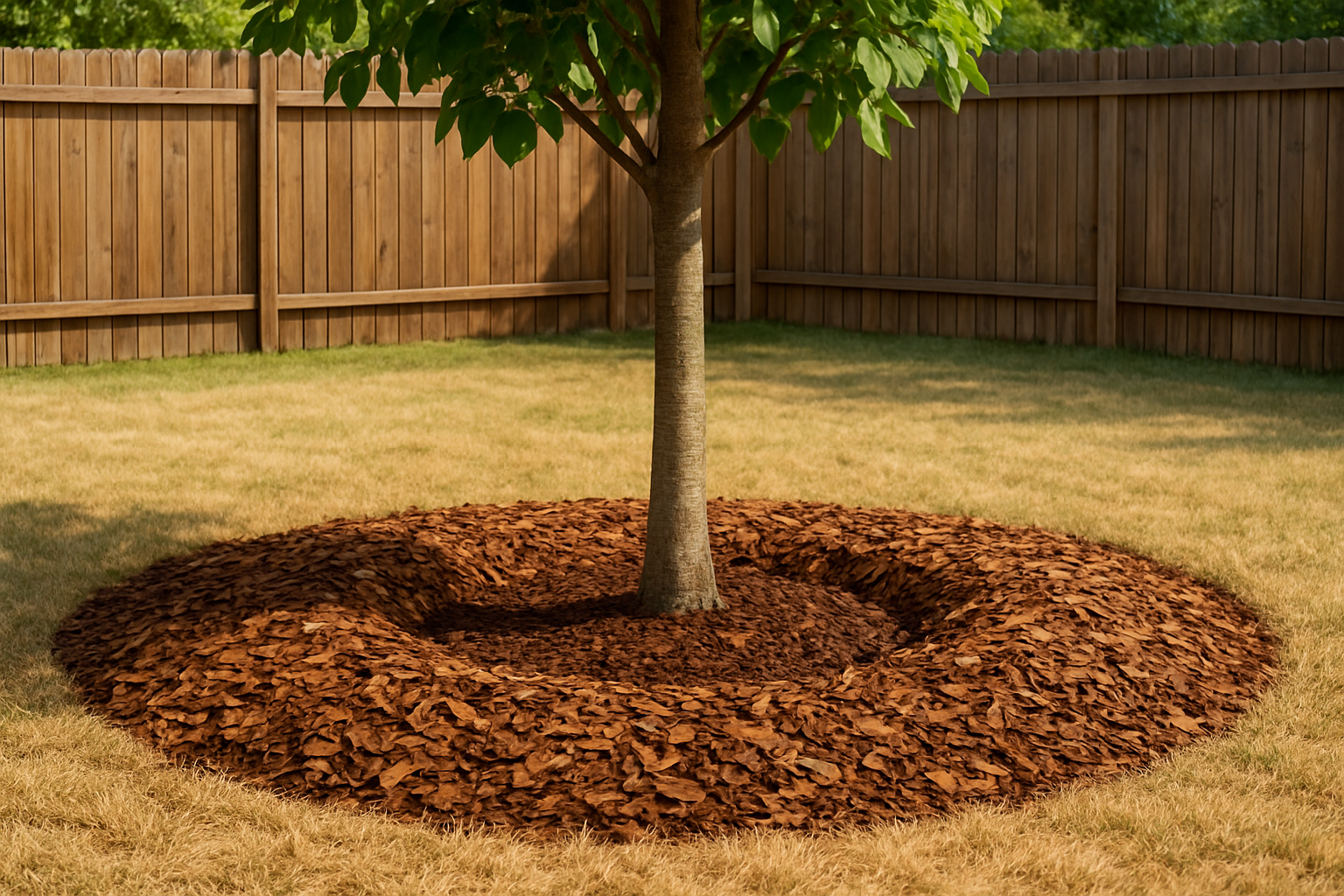
If you want a simple and effective way to help your trees survive Houston’s August heat, add mulch. A proper mulch ring acts like insulation for the soil. It helps retain moisture, reduces temperature swings, and limits competition from grass and weeds.
However, mulch must be installed correctly. Piling mulch against the trunk in a “mulch volcano” can trap moisture against the bark and create conditions for decay, insects, and disease.
For best results:
- Apply mulch 2–4 inches deep around the tree.
- Keep mulch several inches away from the trunk.
- Extend the mulch ring as wide as practical, ideally toward the drip line.
- Use natural wood mulch rather than rock, which can increase soil heat.
- Refresh mulch as it breaks down, but avoid creating an overly thick layer.
At ArborTrue, we often recommend mulch as part of a larger tree health strategy because it is affordable, effective, and especially helpful during drought. It also protects roots from mower and string trimmer damage, which is a common issue in Houston yards.
Know the Signs of Drought Stress
Trees often show warning signs before serious decline occurs. During August, it is important to walk your property and look closely at your trees, especially older trees, newly planted trees, and trees near driveways, sidewalks, or streets.
Common drought stress symptoms include:
- Leaves wilting, curling, or folding during the day
- Brown or crispy leaf edges
- Yellowing leaves or early leaf drop
- Thinning canopy or sparse growth
- Dead twigs or branch tips
- Cracks in dry soil around the root zone
- Premature acorn, seed, or fruit drop
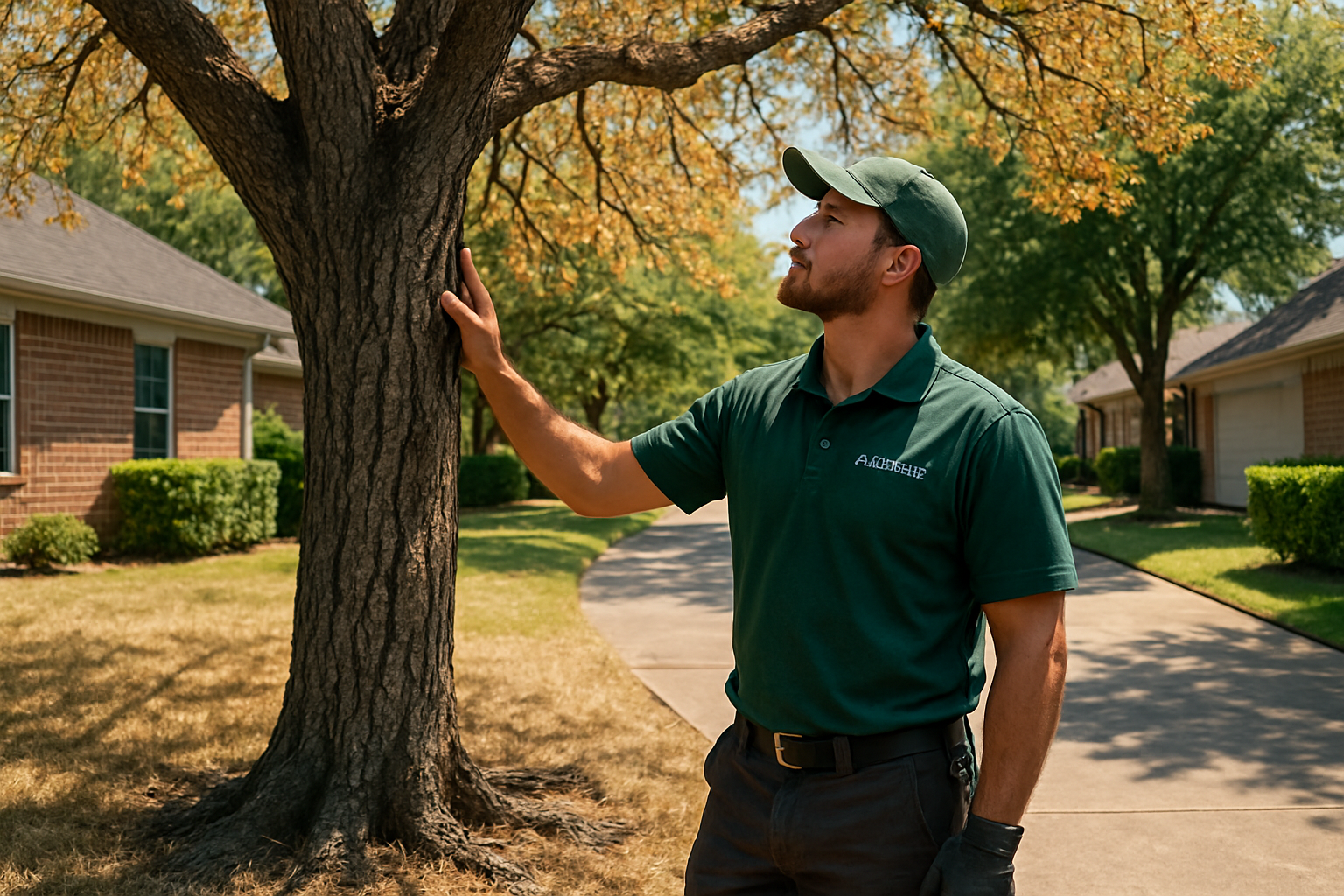
Some of these symptoms may look like simple heat stress, but they can also indicate pest problems, root damage, disease, or structural decline. That is why a professional tree inspection is valuable. ArborTrue can help determine whether your tree needs improved watering, soil care, selective pruning, pest management, or another solution.
Be Careful With Pruning During Drought
Pruning can improve tree structure and safety, but timing matters. During drought conditions, heavy pruning can add stress because the tree is already using its energy reserves to survive. Removing too much live canopy can reduce the tree’s ability to produce food and protect itself from intense sun.
That does not mean all pruning should wait. Dead, broken, diseased, or hazardous branches should be addressed promptly, especially during hurricane season. August is also a time when sudden thunderstorms can roll through Houston, and weakened limbs may fail during high winds.
ArborTrue takes a careful, tree-first approach. We do not over-prune for appearance at the expense of tree health. Instead, we evaluate the tree’s condition, species, structure, and risk level before recommending any cuts.
Protect Roots From Heat and Compaction
Tree roots are often more shallow than many homeowners think. A large portion of absorbing roots may be located in the top 12–18 inches of soil. During drought, these roots are vulnerable to heat, dryness, and compaction.
To protect your tree’s root zone:
- Avoid parking vehicles under trees.
- Limit heavy foot traffic around exposed roots.
- Do not pile soil, gravel, or construction materials over roots.
- Keep lawn equipment from damaging surface roots and trunk flare.
- Consider professional soil care if the ground is severely compacted.
Root damage is one of the most common hidden causes of tree decline. Once the root system is compromised, the canopy may show symptoms weeks or months later. ArborTrue can assess root zone conditions and recommend practical steps to improve tree resilience.
Do Not Ignore Pests and Disease in Drought-Stressed Trees
Drought-stressed trees are more attractive to certain insects and more vulnerable to disease. When a tree is healthy, it can often defend itself. When it is stressed, those defenses weaken.
In Houston, we commonly watch for secondary issues such as borers, scale insects, fungal pathogens, and decay in already weakened trees. Brown leaves are not always “just drought.” Sometimes drought opens the door to problems that need professional attention.
If you notice unusual holes in bark, sawdust-like material, oozing sap, mushrooms near the base, large dead limbs, or rapid canopy decline, contact ArborTrue for an inspection. Early action can make a major difference.
Why Choose ArborTrue for Houston Tree Care?
When your trees are stressed by heat and drought, you need more than a quick guess. You need local experience, honest recommendations, and skilled tree care. ArborTrue is based in Houston, TX, and we understand the challenges trees face in our region—from August drought stress to storm damage, compacted clay soil, and pest pressure.
Customers choose ArborTrue because we provide:
- Local knowledge: We understand Houston weather patterns, soils, and common tree species.
- Tree-focused recommendations: Our goal is to preserve and protect healthy trees whenever possible.
- Safety-minded service: We identify hazardous limbs and structural concerns before they become emergencies.
- Clear communication: We explain what we see, what it means, and what options make sense.
- Professional results: From pruning to tree health assessments, we approach every property with care.
Your trees add shade, beauty, property value, and comfort to your home—especially during a hot Houston summer. Protecting them during drought is an investment in your landscape and your safety.
Schedule a Drought Stress Tree Inspection Today
If your trees are dropping leaves early, looking thin, showing brown edges, or simply not handling the August heat well, ArborTrue is here to help. The sooner drought stress is addressed, the better chance your tree has to recover and stay strong through the rest of the season.
Contact ArborTrue in Houston, TX today to schedule a professional tree inspection or tree care service. We will help you understand what your trees need now—and how to protect them before the next heat wave or storm arrives.

